Why This Tour
The Eastern Turkey Tour covers the territory that most Turkey tours never reach. Starting with a flight from Istanbul to Gaziantep, this program sweeps through the Neolithic heartland around Göbekli Tepe and Karahan Tepe, crosses into the Urartian and Armenian heritage zone around Lake Van and Kars, follows the Black Sea coast through Trabzon and Amasya, and returns west through the ancient Hittite capital of Hattusha and Ankara. This is a completely different Turkey from the Aegean coast tours.
Three Civilizations Most Visitors Never See
The eastern route brings you face to face with three civilizations that barely register on standard tour itineraries:
The Urartians (900–600 BC) built an empire around Lake Van with engineering that matched anything in the contemporary Assyrian world. Three days around Van reveal their legacy: Van Castle, Çavuştepe (a fortress-palace built by King Sarduri II), and Ayanis Castle overlooking the lake. The Van Museum holds one of Turkey’s finest collections of cuneiform inscriptions and bronze work from this period.
The Armenians left monumental architecture across eastern Anatolia. Ani, the medieval Armenian capital near Kars, was once a Silk Road city of 100,000 people — its churches, mosques, and caravanserai walls still stand against the dramatic border landscape. On Akdamar Island in Lake Van, the Church of the Holy Cross (915 AD) has some of the most extraordinary Biblical stone reliefs anywhere in the world.
The Hittites (1600–1178 BC) ruled an empire from central Anatolia that rivaled Egypt. Hattusha, their capital near modern Boğazkale, preserves six kilometres of city walls, monumental gates with lion and sphinx sculptures, and the open-air rock sanctuary of Yazılıkaya — a gallery of Hittite gods carved into living rock.
The Southeast — Where Civilizations Overlap
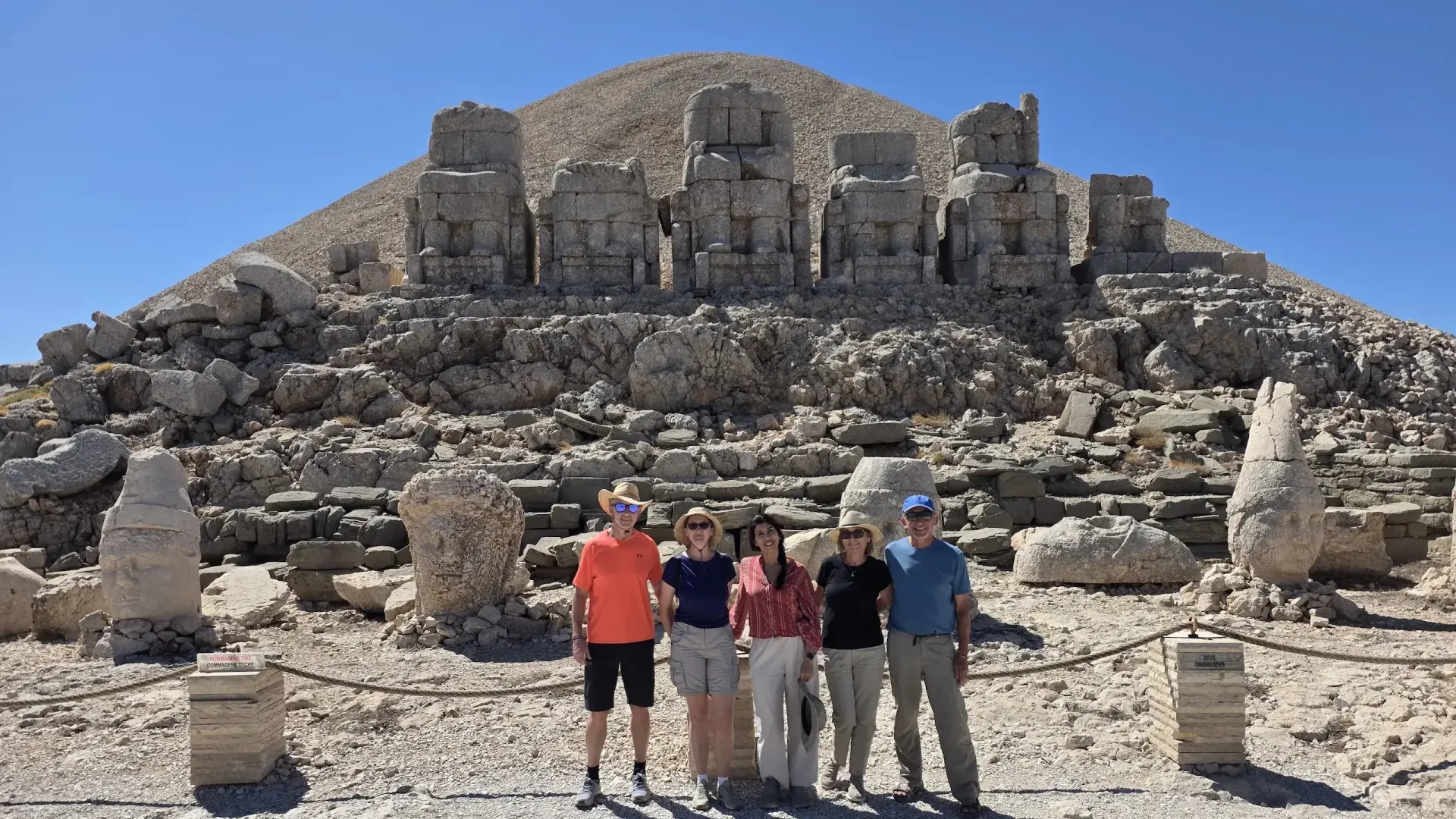
The first four days of this tour concentrate on Turkey’s most archaeologically dense region. Göbekli Tepe and Karahan Tepe predate everything else on this tour by thousands of years. Mount Nemrut represents the Hellenistic Commagene Kingdom. Mardin is a living museum where Syriac, Kurdish, Arab, and Turkish cultures coexist — the 5th-century Dayrul Zafran Monastery is still an active Syriac Orthodox community. And Zerzavan Castle marked the easternmost frontier of the Roman Empire.
The Black Sea and Central Return
After the deep east, the route turns north to the Black Sea coast. Sumela Monastery, built into a vertical cliff face, is one of Turkey’s most dramatic structures. Amasya provides an atmospheric night stop — Ottoman mansions reflected in the Yeşilırmak River with Pontic rock tombs carved into the cliff above. The Museum of Anatolian Civilizations in Ankara ties the entire journey together, with artifacts spanning every civilization you’ve encountered on this tour.
Who This Tour Is For
- Repeat visitors who have seen western Turkey and want the road less travelled
- Ancient history enthusiasts interested in Urartian, Hittite, and Armenian heritage
- Travellers drawn to Göbekli Tepe, Karahan Tepe, and the Neolithic revolution
- Those comfortable with longer driving days and more remote locations
- This is a private tour — dates are flexible and the itinerary can be adjusted
Compare Your Options
If you want Göbekli Tepe and Mount Nemrut combined with the western Turkey classics (Ephesus, Troy, Pamukkale), see the 14-Day Treasures of Ancient Turkey Tour. For the complete experience covering both east and west, the Grand 23-Day Turkey Tour combines elements of both programs.