Quick Answer
Göbekli Tepe is an early Neolithic settlement near Şanlıurfa with monumental communal buildings dating from approximately 9600 BCE. Visitors see T-shaped limestone pillars and animal reliefs from designated walkways. UNESCO’s description records both the monumental buildings and evidence of domestic structures. Pair the site with the Şanlıurfa Archaeology Museum for context; confirm current access and ticket arrangements before travelling.
Correction, September 2026: An earlier version described the whole site as the oldest known sanctuary, treated deliberate burial as certain and presented ritual as preceding farming in a simple sequence. This revision distinguishes archaeological evidence from those interpretations.
What Göbekli Tepe Is
The site sits on a rounded hilltop northeast of Şanlıurfa. From the road, you see little that would suggest monumental buildings. The hill is low, the landscape dry, and the approach is quiet. That is part of what makes the first encounter with the stone circles so effective — there is no preparation for what lies below ground level.
Göbekli Tepe preserves some of the earliest known monumental architecture. UNESCO dates the communal buildings to the 10th and 9th millennia BCE and interprets them as spaces probably associated with social events and rituals. Evidence of domestic structures places those monuments within a settlement, rather than an isolated sanctuary without inhabitants.
How the buildings filled up also requires care. Excavation-team research on stone tools and deposits describes later mixing that complicates interpretation. A single story in which the inhabitants deliberately buried the entire site should not be presented as established fact.
Who Built It
The builders belonged to Pre-Pottery Neolithic communities in Upper Mesopotamia. UNESCO describes groups with hunter-gatherer lifeways living during the transition toward the first farming communities. That transition involved changes in food procurement, settlement and social organisation; it was not a simple moment when wandering hunters suddenly became farmers.
The builders worked without metal tools or pottery, but hunter-gatherer lifeways do not imply an absence of settled communities. Excavation-team research documents domestic activities at Göbekli Tepe.
The Stone Circles
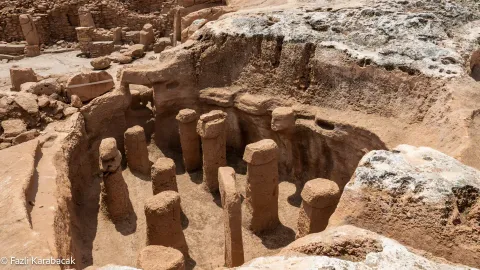
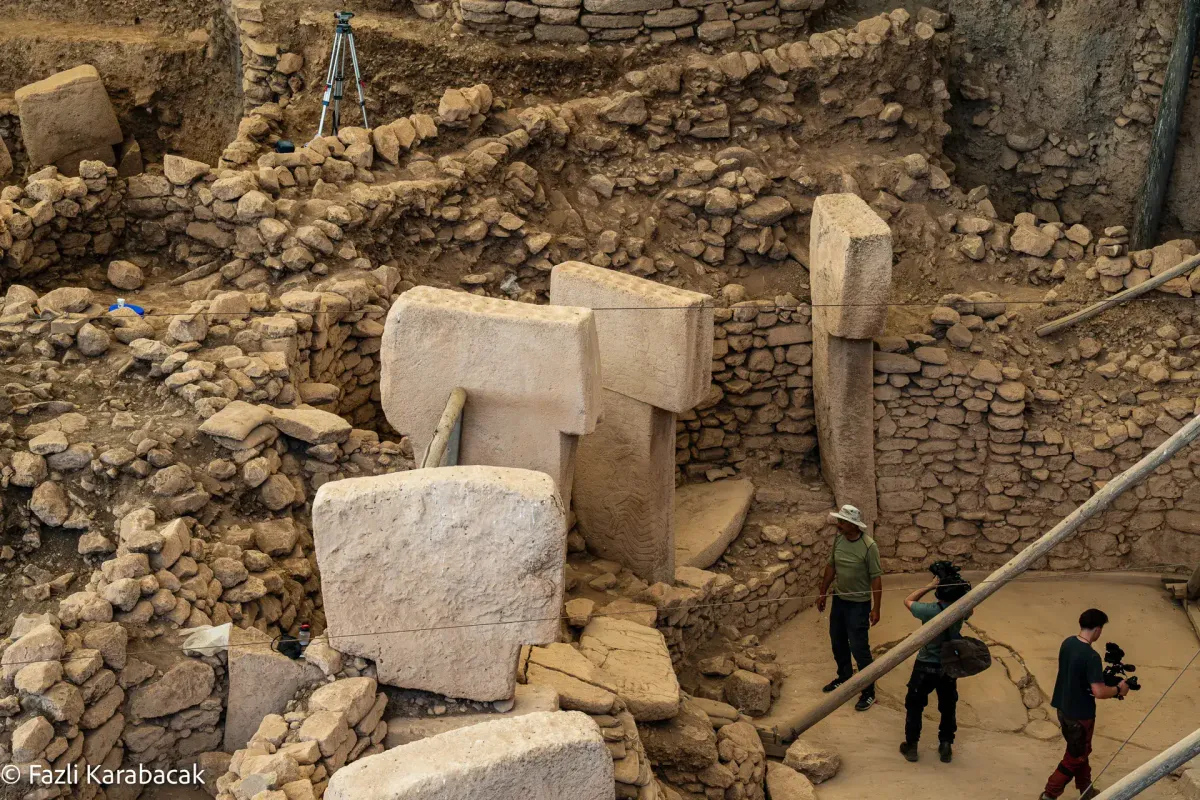
The best-known monumental enclosures contain central pairs of T-shaped pillars surrounded by further pillars and stone walls. Their layouts vary, so one plan should not be assumed for every building. UNESCO records pillars up to 5.5 metres tall, carved from the adjacent limestone plateau.
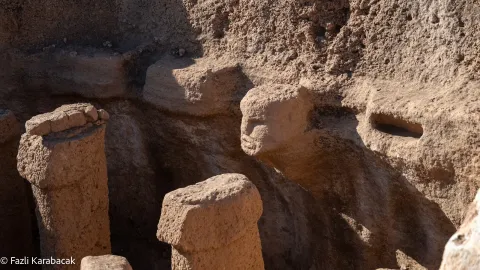
The surfaces carry animal reliefs, including foxes, snakes, wild boar and birds. Arms, hands and items of clothing on some pillars support their interpretation as stylised human forms. The images may have carried symbolic or ritual meaning, but their precise meanings are not known.
Why It Matters
Göbekli Tepe challenges simple accounts in which fully developed farming had to precede monumental communal buildings. Its architecture demonstrates skilled construction and coordinated labour during the transition toward farming communities. It does not, by itself, establish that religion caused agriculture or that ritual came before settled life.
Animal bones and tools help researchers investigate food preparation, daily life and communal activity. The site is now interpreted as a settlement with a strong ritual component, rather than a destination entirely separate from habitation.
Visiting Göbekli Tepe
The site now has a visitor centre and a large canopy sheltering the main excavated enclosures. When I first came here in the early 2000s, none of that existed. The experience has changed, but the stones have not.
I start every visit at Enclosure D, where the tall central pillars stand. The scale does not register in photographs. Viewing them from the designated walkway gives a better sense of their size; visitors do not enter the enclosures. The surrounding landscape helps place the buildings in their wider setting, although today’s environment is not identical to the Neolithic one.
The Şanlıurfa Archaeology Museum displays finds from Göbekli Tepe and other regional sites. I always pair a museum visit with the site itself. The stones tell one part of the story. The small objects — the tools, the carved figures, the ground stone — tell the rest.
Frequently Asked Questions
Is Göbekli Tepe really a temple? The monumental buildings are interpreted as communal spaces with a ritual component, but the wider site also contains domestic evidence. “Temple” is an interpretation of particular buildings, not proof that nobody lived at Göbekli Tepe. Our temple-versus-settlement explainer discusses the excavation evidence.
What do the animal carvings mean? We don’t know for certain. The animals depicted — foxes, vultures, boars, snakes, scorpions — were all present in the Neolithic landscape. They may have had totemic or clan significance, or they may have held spiritual meaning related to concepts we no longer understand. The precision of the carving suggests intentionality, but their exact meaning remains one of archaeology’s open questions.
How were the pillars transported and erected? The pillars were carved from the adjacent limestone plateau. Their construction required skilled stoneworking and coordinated labour, but the exact methods used to move and raise each pillar are not established. Sledges and other proposed techniques should be understood as hypotheses, not documented equipment from the site.
Was Göbekli Tepe deliberately buried? Deliberate filling has been proposed for parts of the site, but a claim that the entire settlement was intentionally buried in one event is too certain. Excavation-team research shows that deposits have also been affected by later mixing. The history of individual buildings and their fills needs to be assessed separately.
Could ordinary people visit Göbekli Tepe, or was it elite-only? The site’s scale suggests communal effort, but domestic evidence also supports settlement. Whether particular buildings were open to everyone or activities were restricted to certain participants is not established by the architecture alone.
Why did Göbekli Tepe matter to human history? It documents early monumental building and complex social activity during the transition toward farming communities. It challenges simple models of that transition, but does not prove that religion came before settlement.
Can I visit Göbekli Tepe on my own, or do I need a guide? Independent visits use the visitor centre and designated walkways; confirm current access rules before travelling. A guide can explain the chronology of the enclosures, discuss interpretations of the carvings and distinguish excavation findings from open questions. Our Göbekli Tepe visitor guide covers practical planning.