Quick Answer
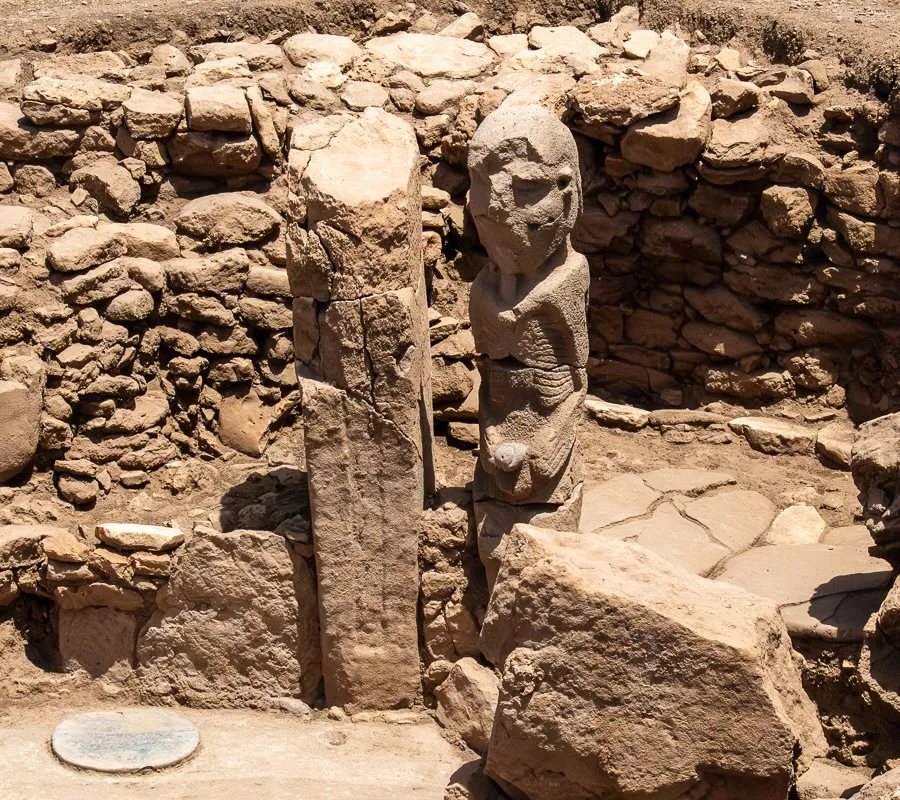
The Karahan Tepe male statue is a 2.3-metre seated human figure announced by Türkiye’s Ministry of Culture and Tourism on 30 September 2023. The official discovery report describes a figure fixed to the floor within a bench, with pronounced ribs, spine and shoulder bones. It is an important Neolithic discovery, but that announcement does not establish an exact carving date or a worldwide claim to being the oldest human statue.
Correction, September 2026: An earlier version called the statue exactly 12,000 years old and the oldest known large-scale human figure. It also misdescribed its seated posture and the basis of radiocarbon dating. This revision separates reported observations from interpretations.
The Seated Figure
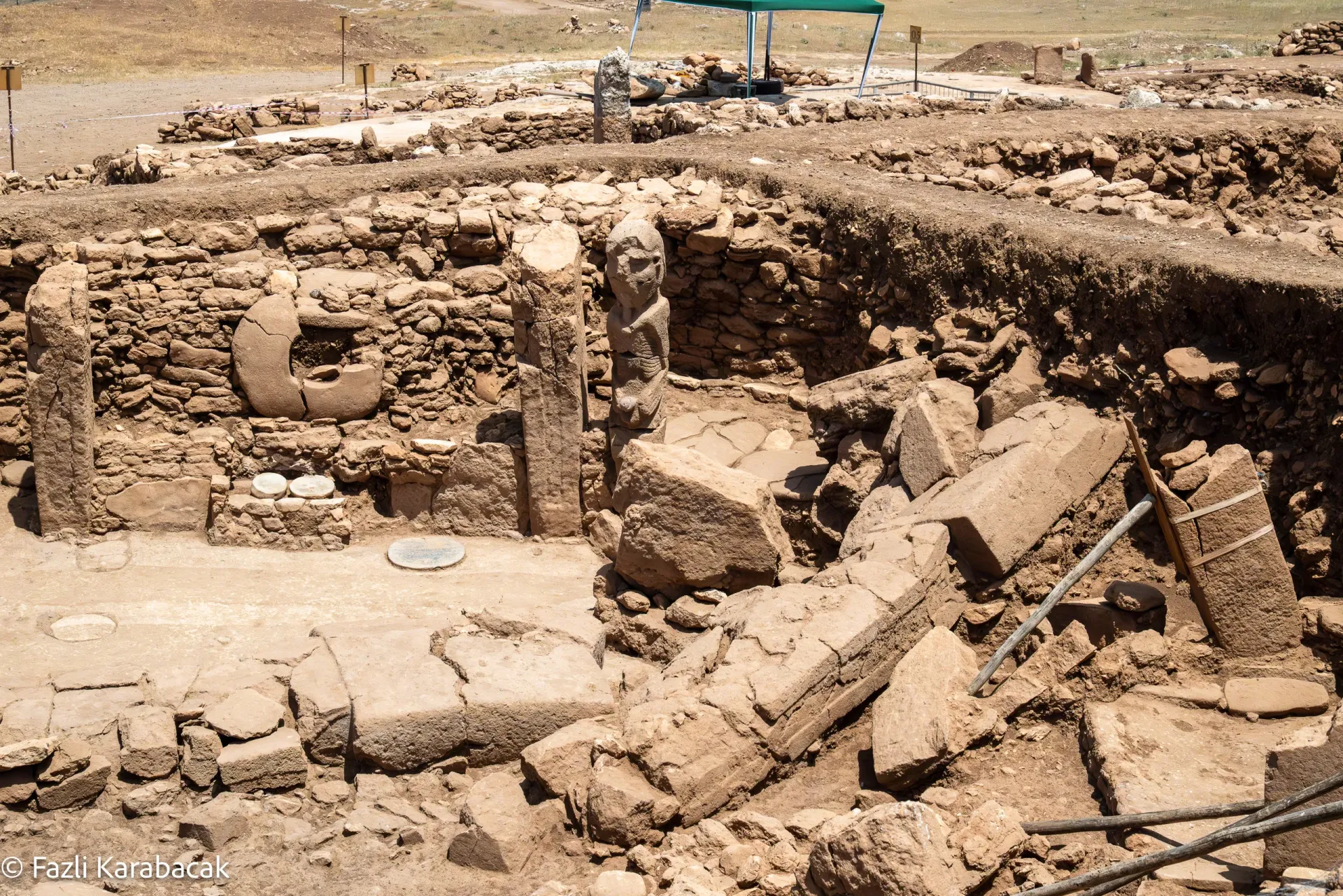
I have been visiting Karahan Tepe since the early days of the 2019 excavations, when the scale of the site was only beginning to emerge. Each season brought new structures, new carvings, new questions. But when the male statue was revealed in 2023, it was clear that this was something different from anything the excavation had produced before.
The Ministry reports a height of 2.3 metres, not a millimetre-precise measurement. The figure is seated, although the sculpture is upright in its architectural setting. Its face and emphasised bones are central to the announcement’s description. A vulture sculpture and stone plates were reported in the same area.
The Ministry suggests that the prominent bones evoke a dead person. That is an interpretation of the imagery, not an identification of a particular individual or proof of a specific belief. Details described elsewhere as a necklace of teeth or beads are not identified that way in the announcement.
How Old Is the Statue?
The discovery belongs to Karahan Tepe’s Pre-Pottery Neolithic research context. However, the Ministry’s 2023 announcement does not provide a statue-specific date range or radiocarbon sample results. Describing the sculpture as exactly 12,000 years old turns a broad prehistoric timeframe into a precision that this source does not support.
Radiocarbon dating measures carbon in suitable organic material, not the date when a stone was carved. As the Oxford Radiocarbon Accelerator Unit explains, samples such as charcoal, seeds or bone can be dated, but their relationship to an object must be established. A date from nearby deposits is not automatically a direct date for a sculpture.
Why It Matters Without an “Oldest” Claim
Large human sculptures were already known from the Pre-Pottery Neolithic before this discovery. The Ministry’s Şanlıurfa Archaeology Museum guide describes the 1.8-metre Balıklıgöl statue, also called Urfa Man, found in the 1990s. It is therefore incorrect to say that the earliest known comparable figures previously belonged to the Bronze Age.
Karahan Tepe’s contribution is the combination of scale, anatomical detail and architectural context. The statue adds to an existing record of Neolithic human imagery. Its significance does not depend on assigning it an unverified world record.
The Wider Site
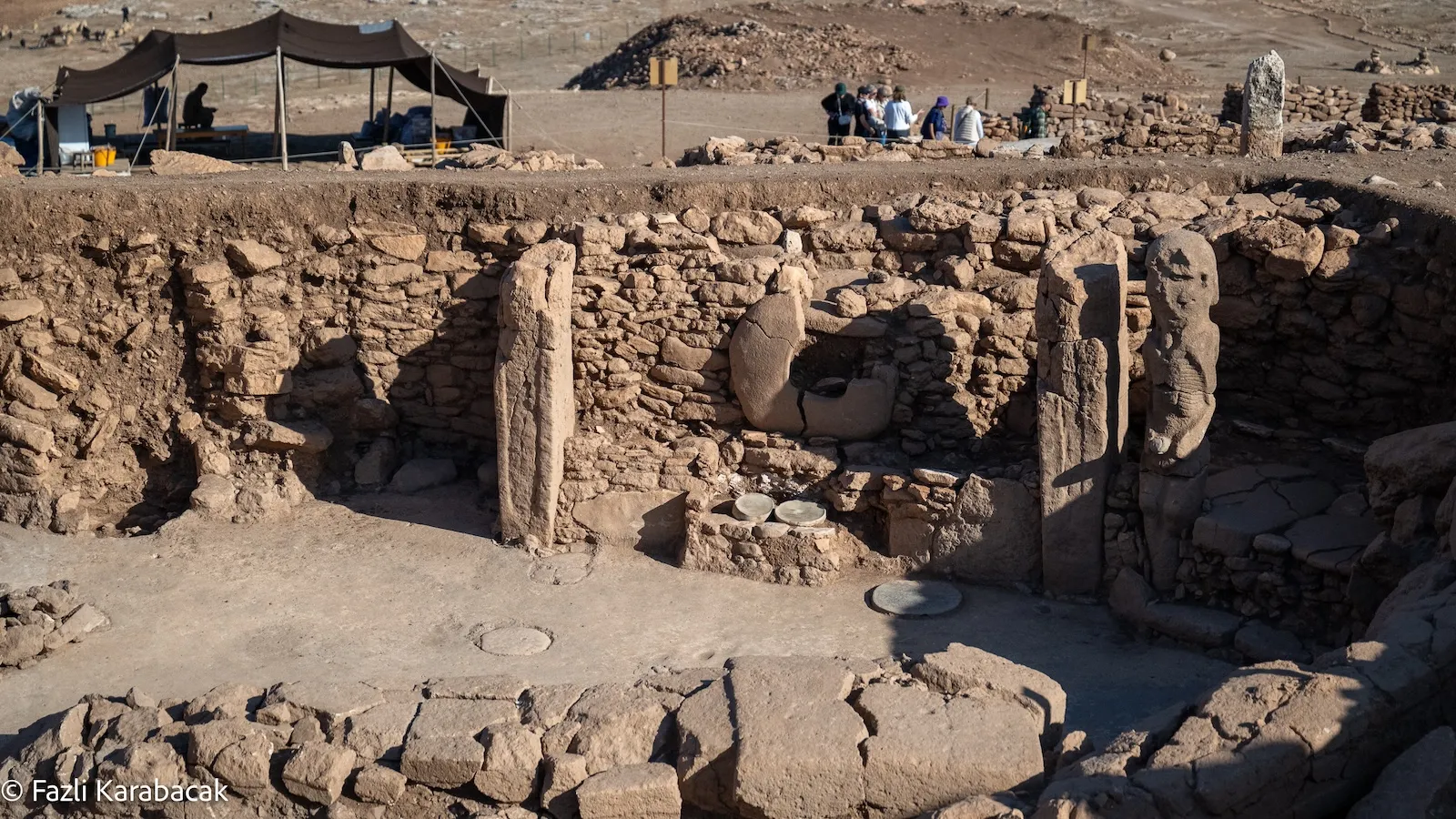
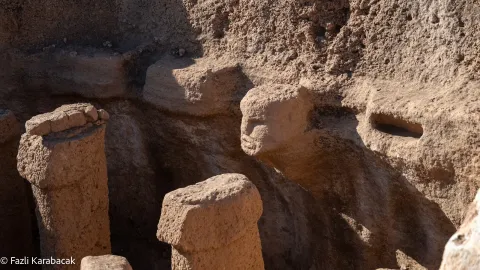
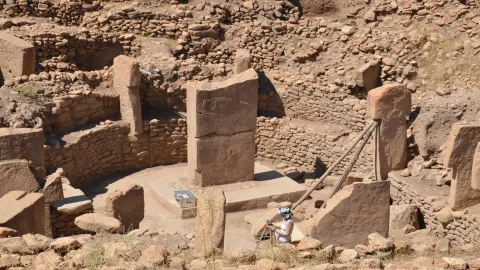
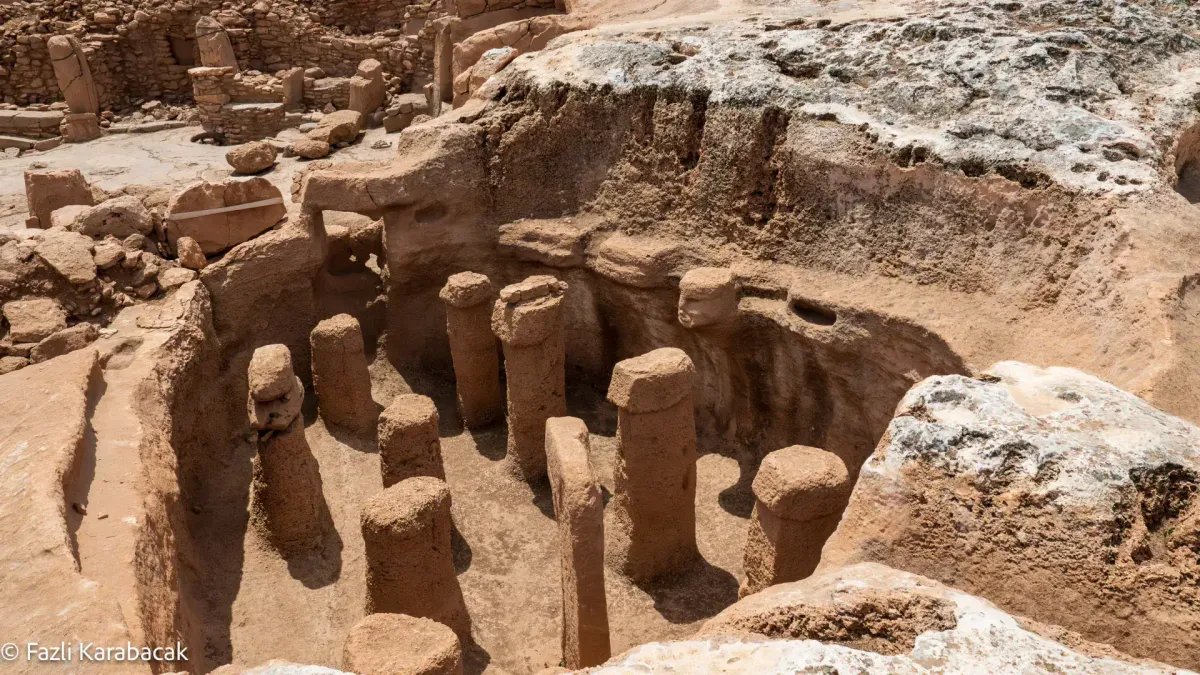
Karahan Tepe lies in the Şanlıurfa region of southeastern Turkey and is investigated within the Taş Tepeler project. Its sculpture should be considered alongside the site’s pillars and buildings, rather than as an isolated art object.
Comparing it with Göbekli Tepe’s architecture and imagery helps explain the wider regional setting. Similarities do not make the sites identical, and differences do not establish that human representation was absent at one of them. The museum collection provides further context through sculpture and reliefs from several Neolithic sites.
Still Emerging
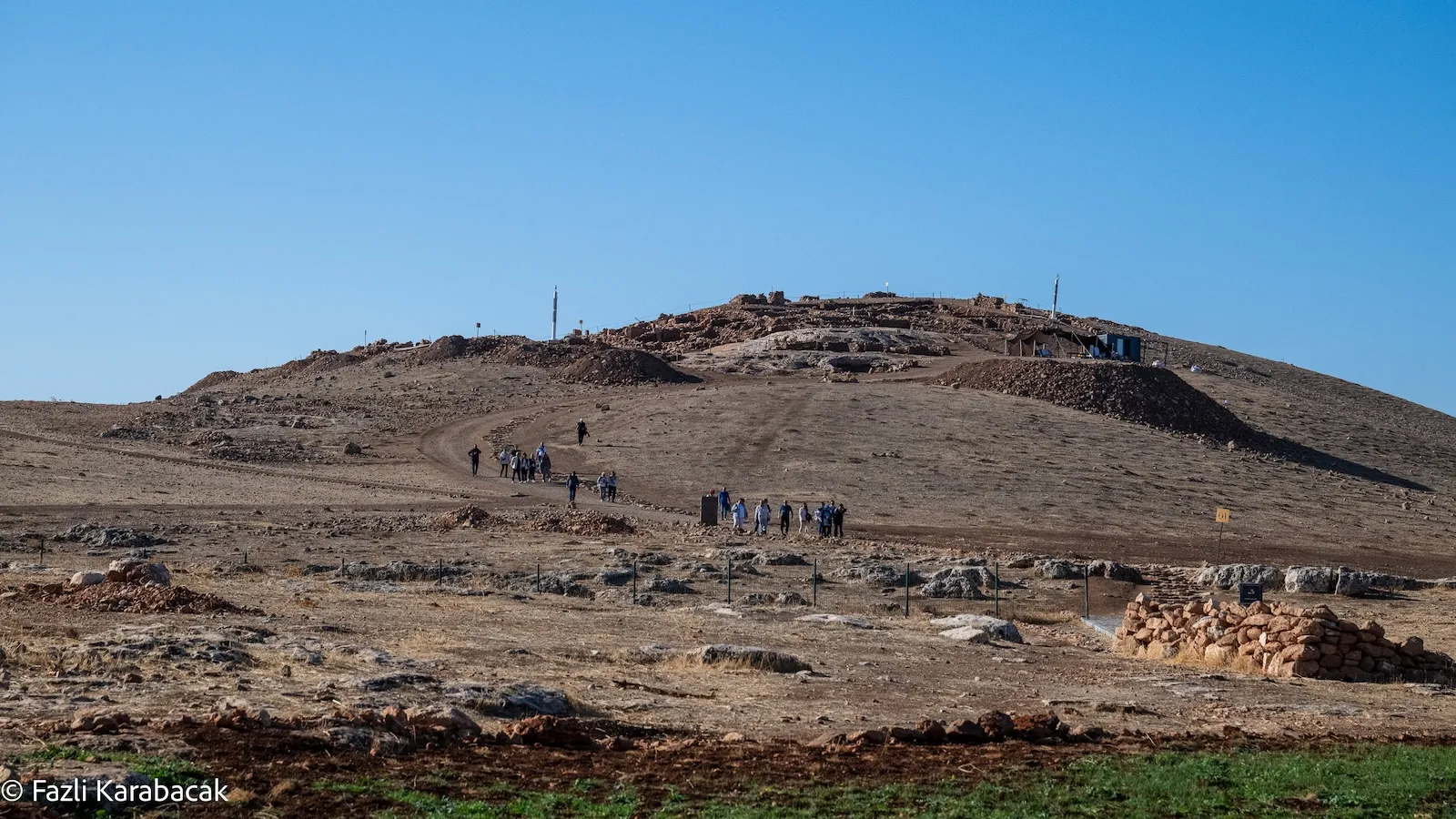
Karahan Tepe is an active excavation, so visitor access and the display location of individual finds can change. A photograph of a sculpture in its excavation setting does not guarantee that visitors can see the original there today. Confirm current access and display arrangements before travelling.
For a visit, the useful questions are what is currently visible, how the sculpture relates to its building and which interpretations the excavation evidence supports. New discoveries may refine those answers.
Plan a Visit to Karahan Tepe
Start with our Karahan Tepe visitor guide for planning context and our Göbekli Tepe visitor guide if you want to combine the sites. The combined-site itinerary article discusses how to organise the route.
Both sites are included in the 14-day Treasures of Ancient Turkey tour and the 6-day Göbekli Tepe tour from Cappadocia. Consult each published itinerary and confirm access and availability; a site visit does not guarantee access to a particular artefact.
For additional coverage, our sister sites offer a Karahan Tepe guide and a Göbekli Tepe guide.
Frequently Asked Questions
Is it the oldest known human statue? The official discovery announcement does not establish that ranking. Other large Pre-Pottery Neolithic human sculptures, including Urfa Man, were known before 2023. A comparison needs securely dated contexts and a clear definition of what is being compared.
Is the statue definitely 12,000 years old? The Ministry’s 2023 announcement does not give an exact carving date or statue-specific radiocarbon results. The date of a stone sculpture is assessed through its archaeological context; radiocarbon dates suitable associated organic material, not the act of carving the stone.
Is the figure standing or seated? The Ministry describes a seated figure fixed to the floor within a bench. Its reported height of 2.3 metres should not be confused with a standing pose.
Could this be a god figure or a real person? Its identity is not established. Interpretations involving a deceased person, an ancestor or a supernatural figure should not be presented as confirmed identifications. Anatomical detail alone cannot demonstrate that the sculpture is a portrait.
Can I see the original statue on a visit? Confirm its current display location and access arrangements with the site or museum before travelling. Excavation photographs and past announcements are not a guarantee that the original is currently on public view.
What else has Karahan Tepe produced that makes it significant? The same 2023 announcement reports a vulture sculpture and stone plates in the area of the human statue. Such finds help researchers consider the relationship between sculpture, buildings and activities, rather than interpreting the human figure in isolation.